
Politics Midlands – Brexit, HS2, agriculture and system change

January 27, 2020
On Sunday 26th January, Ellie joined Elizabeth Glinka at the Politics Midlands show, discussing everything from HS2 to farming in the West Midlands. You can watch the show here.
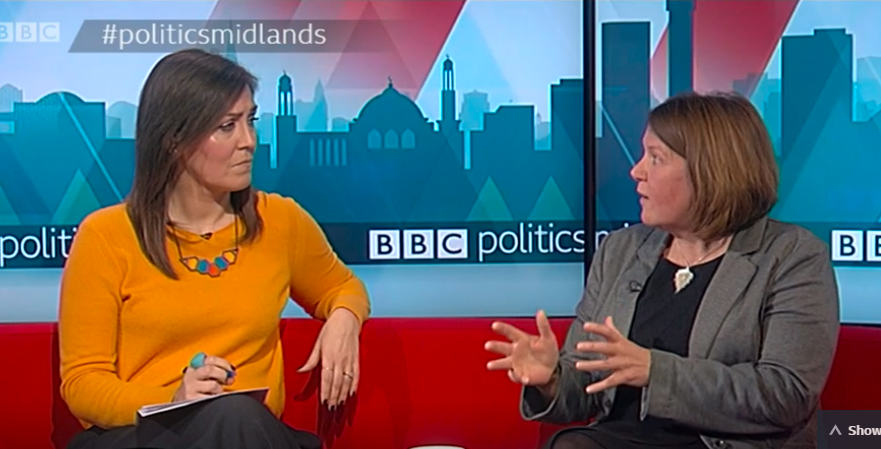
Ellie on HS2:
“It’s true, quite a bit of money has been spent on it already. But that’s the sunk cost fallacy – do you continue throwing good money after bad? Because we’d spent 10 times what we’ve already spent on a project that, in my view, is a complete white elephant.
Now, I’m a massive fan of high-speed rail, I travel every week on high speed rail to my job in Brussels. I’m a really big fan.
HS2 is the problem. It is massively over-engineered. It’s designed to be the fastest ever high speed rail link, and as a result is by far the most expensive
When I looked into the details of this, about 6 months ago to make sure I really understood it, I discovered it’s five times more expensive per kilometre than any other high-speed rail project done over the last ten years.
[Scrapping the whole thing] is not a good way to solve our capacity problems. We’ve got capacity problems not just between London and Birmingham, not just between Birmingham and the north, we’ve got capacity problems across the whole network, including all of those commuters from all over the West Midlands trying to come into Birmingham. This is a waste of money, that money could be much better spent on things like electrifying the UK rail network, improving capacity on commuter lines, and possibly in the future building a high speed rail link but the one that is designed to be good value for money. This is terrible value for money HS2.
The evidence shows that the carbon footprint of HS2 will not be repaid for over 100 years. It is a high carbon project, it is not an ecological project by any stretch of the imagination.
We absolutely have to be using more public transport, but my point is that public transport has to be the local public transport.”
On Farming and Brexit:
“I think we’ve got a real job to do to defend the food standards that we’ve got, because people aren’t only concerned about food price, they’re also concerned about the quality of food. And I think that’s the way we should be going, not a kind of race to the bottom for the cheapest and largest amount of food. We’ve already got problems of food waste, we’ve got problems of being overweight and obesity in our country as well.
So actually, we should be thinking how can we use Brexit and the opportunity to take more control of our agriculture policy to support the kind of agriculture we want to see, and that means more plant based, more ecological.
We’ve got a serious problem of nature being in crisis and that’s in significant part due to overuse of pesticides, fertilisers. Farming’s a key issue in of that. So, we need to make sure we get that balance between producing good, healthy food at a decent price, and also taking care of the environment it’s grown in.”
On individual action vs system change:
“I’m part of a car pool, and from next week I’ll be driving only electric with the car pool. I use a bicycle, when I go back to my job at the University of Birmingham I’ll cycle to get to the station.
I’m veggie, and I try to eat vegan as much as possible. I have in the past tried insect flour biscuits. It’s fine, anything that helps people.
Individual behaviour change is really important. Transport is a key part of that, diet is a key part of that. But we need system change for the country as a whole, for global society as a whole, whether that’s transport systems or the way we support agriculture, to help people do the right thing. And that’s what I hope that the climate assembly is going to help the country do.
Greta Thunberg has been absolutely right in saying nowhere near enough is being done. Individuals changing their diet, yes, but if we’ve got an agricultural system that’s essentially industrialised agriculture, over production of meat, we’re going in the wrong direction. If we’re taking a reusable water bottle but still flying every week, that’s not going in the right direction. She’s done a brilliant job of waking people up.
It’s been really interesting working in the European Parliament, because I’ve seen the way that that Green wave of concern over climate has pushed all the parties to start to talk about this, to take it on board. Just last week we had a vote in the parliament on the Green Deal at European level, which is going to be a really big push for more renewable energy, away from polluting systems and so forth, and it had cross-party support.